After a CRA reassessment, management must make decisions while the information is incomplete. Those early decisions shape the tax dispute, and lender and board scrutiny.
After a CRA reassessment, management makes decisions under unresolved conditions. This is not a failure of diligence; it is the normal operating environment.
This insight explains how management's initial framing of a CRA dispute with partners, lenders, and boards will shape stakeholders' evaluation of management's performance.
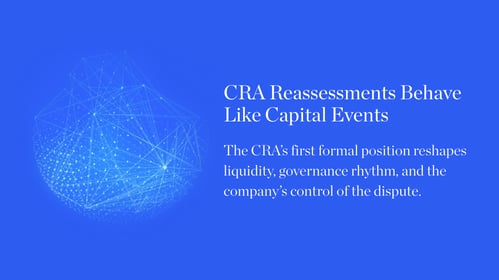
CRA’s audit architecture drives reassessments that behave like capital market shocks inside private companies. This article examines the structural forces at play and how executives maintain control once CRA formalizes its position.
How institutional continuity after a CRA reassessment shapes the advice management receives, influencing which options are developed and how tax disputes unfold.
CRA challenges are often described procedurally, but the decisive moments are structural shifts: when CRA sets out its likely position, when it formalizes that position, and when independent oversight becomes available. Each inflection point alters probabilities and options.